 |
Order : CHIROPTERA
Family : Pteropodidae
Species : Dyacopterus spadiceus
Forearm Length : up to 8.1 cm
Weight : up to 100 grams
(Francis, 2019)
Dyacopterus spadiceus (Dayak Fruit Bat or Dyak Fruit Bat) derives its generic name from the Dayak people
of Borneo. The specific epithet 'spadiceus' refers to the brown/chestnut
colour of the fur on its head and back.
This rarely encountered bat is mainly a canopy
dweller; it forages in the upper levels of primary or mature secondary
forest, unless it is attracted to lower levels by the presence of edible
fruits, especially figs.
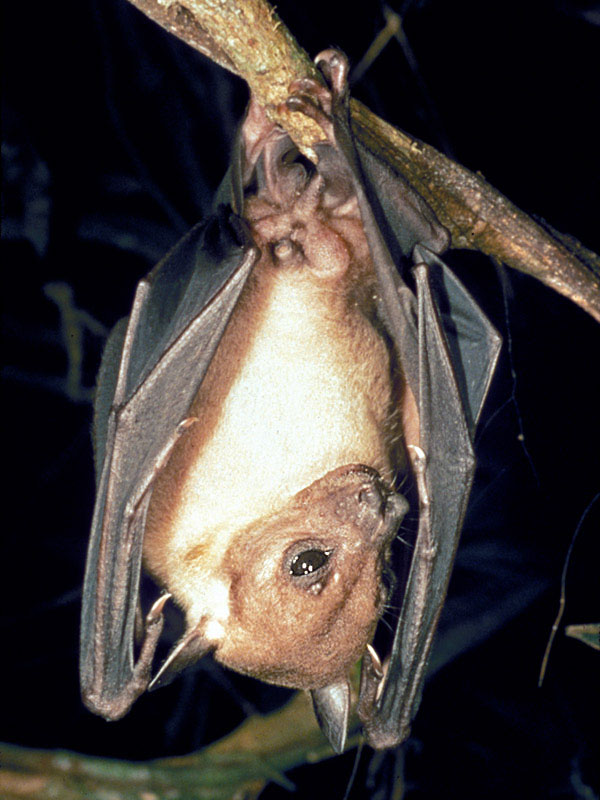
This bat is one of the few mammals where lactation (milk production) can
occur in males. Figure 1 is an example of a lactating male.
With regards to the confirmed distribution of this species, there are many
incomplete and conflicting summaries in the available literature. Suffice to
say that the 'core territories' for this bat includes parts of Peninsular Malaysia, Sumatra and Borneo.
Covering an area of more than 600 square kilometres, Krau Wildlife Reserve,
in the Malaysian state of Pahang, is an important protected area for this and
many other bat species (see Kingston at al, 2006); numerous individuals of
Dyacopterus spadiceus have been captured during studies at Krau, particularly at
Kuala Lompat in the east of the reserve (Figure 1 is an example).
Fig 1 : Image from Kuala Lompat, Krau Wildlife Reserve, Peninsular Malaysia
in 1992. This individual was a lactating male. Photo thanks to C. M. Francis.
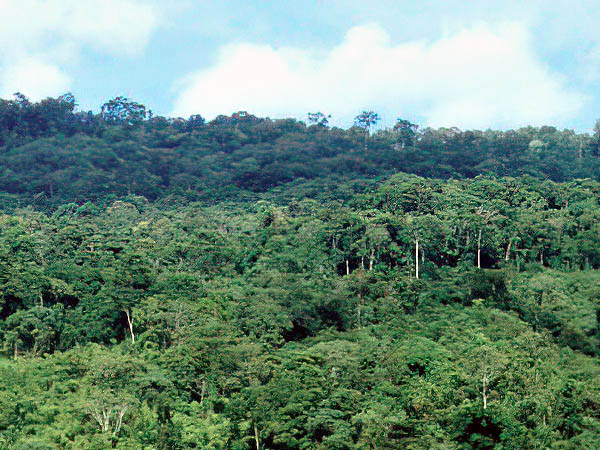
Fig 2 : View of lowland/hill forest from Kipungit Trail, Poring, Sabah, Borneo
in 2001 (estimated 600 metres elevation). Poring is one of the sites in
northern Borneo where Dyacopterus spadiceus is known to occur.
References and links :
Csorba, G., Bumrungsri, S., Francis, C., Bates, P., Gumal, M. and Kingston,
T. 2020. Dyacopterus spadiceus. The IUCN Red List of Threatened
Species 2020: e.T6931A22029918.
Francis, C.M. 2019. A Field Guide to the Mammals of South-east Asia. Second
Edition. New Holland. 416 pp.
Kingston, T., Lim B.L., Zubaid, A., 2006. Bats of Krau Wildlife
Reserve. Universiti Kebangsaan Malaysia.
Wikipedia
- Dyacopterus spadiceus
|