 |
Order : CHIROPTERA
Family : Molossidae
Species : Mops plicatus
Forearm Length : up to 5.0 cm
Weight : up to 31 grams
(Francis, 2019)
Mops plicatus
(Wrinkle-lipped Bat, Wrinkle-lipped Free-tailed Bat, Guano Bat), formerly Tadarida
plicata / Chaerephon plicatus, is one of the four species of the genus Mops
which occur in Southeast Asia. Numerous other species of Mops
occur in Africa and elsewhere.
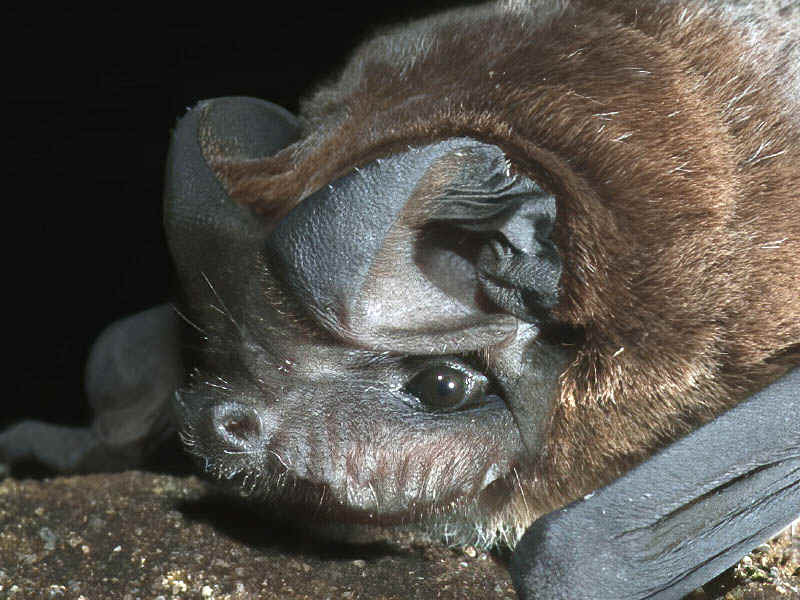
The specific epithet 'plicatus'
means 'folded' which refers to the corrugated structure of the upper lips,
as shown in Figure 1.
In Southeast Asia this bat is widespread, and in
areas with limestone karst geology it can be locally abundant, for example in Thailand and on the
island of Borneo.
Mops plicatus
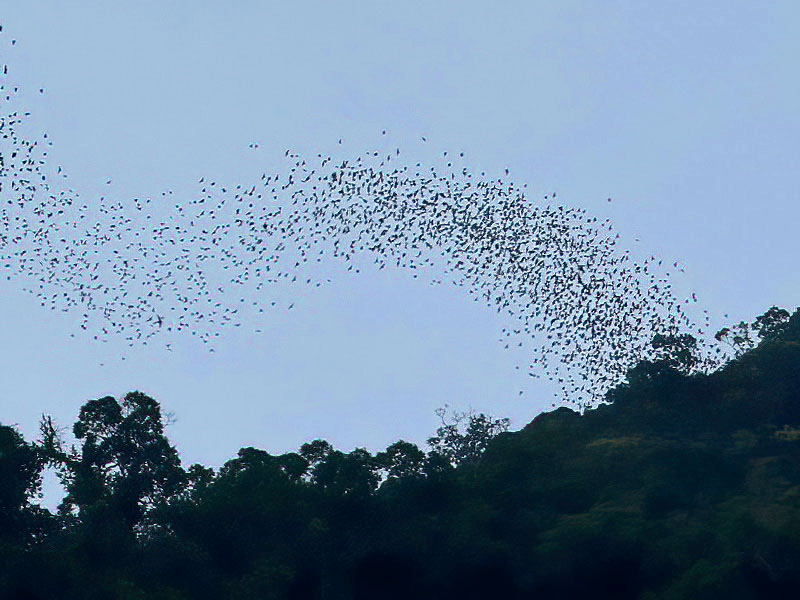
sometimes roost in huge numbers, for example at Gomantong caves in Sabah and at Mulu
caves in Sarawak their
combined population is estimated at several million (Phillipps & Phillipps, 2016).
Away from large cave systems, smaller groups may also roost in small rock
crevices, old buildings and temples (IUCN: Csorba et al, 2020).
A study in Thailand revealed that Mops plicatus consumes a wide variety of insects,
including high-altitude flying insects, and planthoppers of the family
Homoptera, which are a pest of rice fields (Leelaipaibul et al, 2005).
Mops plicatus occurs in Myanmar, Thailand, Cambodia, Laos, Vietnam,
Peninsular Malaysia, Sumatra, Java, Bali, Lombok, Borneo and parts of the
Philippines. Outside the region it occurs in parts of the Indian
subcontinent and southern China.
Despite its apparent abundance, some populations have been lost due to
quarrying and over-harvesting, for
example in Cambodia, Myanmar and the Philippines (Csorba et al, 2020).
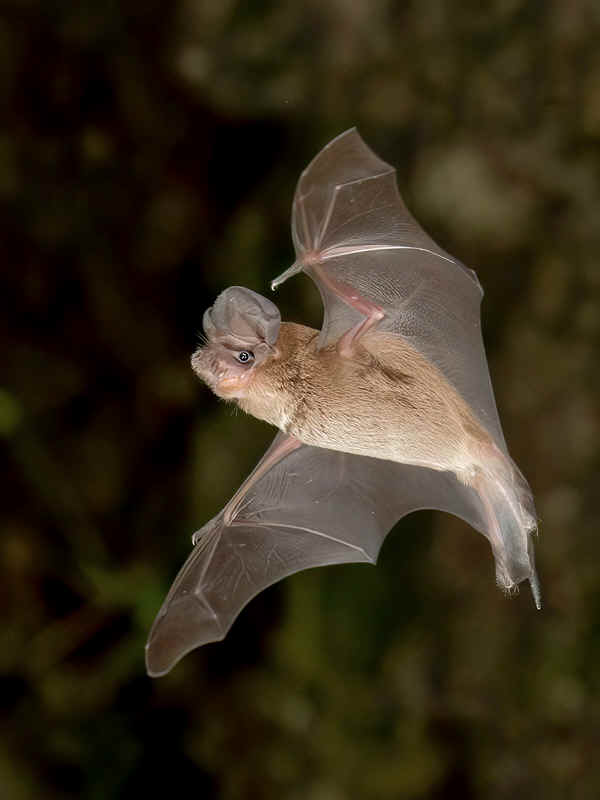
Fig 1 : Example exiting the Gomantong cave system, Sabah, Borneo at dusk. Photo thanks to C. M. Francis.
Fig 2 : Close-up of the head showing the distinctive wrinkled upper lips
which give the species its name. Photo from Gomantong, thanks to C. M. Francis and the Mammal
Images Library of the American Society of Mammalogists.
Fig 3 : Thousands of Mops plicatus stream out of the cave system at
Mulu, Sarawak, Borneo at dusk. Photo thanks to Wayne Spencer.
References :
Csorba, G., Bumrungsri, S., Francis, C., Bates, P., Ong, P., Gumal, M.,
Kingston, T., Heaney, L., Balete, D.S., Molur, S. & Srinivasulu, C.
2020. Chaerephon plicatus. The IUCN Red List of Threatened Species
2020: e.T4316A22018444.
Francis, C.M. 2019. A Field Guide to the Mammals of South-east Asia. Second
Edition. Bloomsbury Publishing. 416 pp.
Leelaipaibul, W., Bumrungsri, S. and & Patanawiboon, A. (2005)
Diet of wrinkle-lipped free-tailed bat (Tadarida plicata Buchannan,
1800) in central Thailand: Insectivorous bats potentially act as biological
pest control agents. Acta Chiropterologica, Volume 7, Issue 1, Pages
111–119.
Phillipps Q. & Phillipps K. (2016). Phillipps’ Field Guide to the
Mammals of Borneo and Their Ecology: Sabah, Sarawak, Brunei, and Kalimantan.
Second Edition. John Beaufoy Publishing. 400 pp.
|