 |
Order : CHIROPTERA
Family : Molossidae
Species : Aethalops aequalis
Forearm Length : up to 4.6 cm
Weight : up to 18 grams
(Phillipps & Phillipps, 2016)
Aethalops aequalis
(Borneo Fruit Bat), was formerly considered a subspecies of Aethalops alecto
(Pygmy Fruit Bat), but is now treated as a Bornean endemic; this was first
proposed by Kitchener et al (1990). As a consequence, Aethalops alecto
is now treated as being limited to Peninsular Malaysia, Sumatra, Java, Bali
and Lombok (Jayaraj et al, 2016).
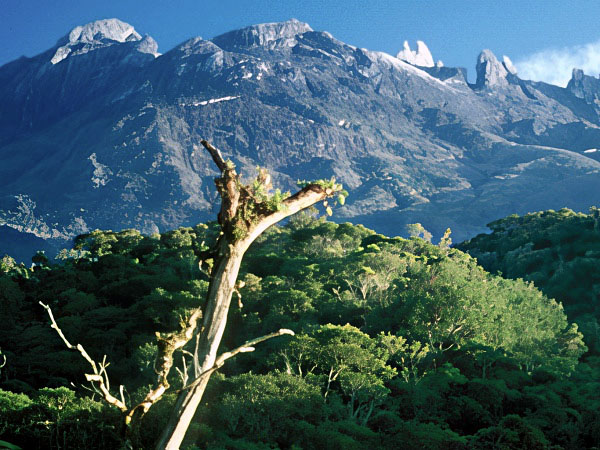
In Borneo, this species is known from Mount Kinabalu and Crocker Range
(Sabah), Ulu Temburong (Brunei) and throughout the Sarawak mountains
(Phillipps & Phillipps, 2016). Jayaraj et al (2016) note its presence in
some protected areas in Kalimantan.
This is primarily a montane species ranging from 550 metres at Gunung Mulu
to 1833 metres on Mount Kinabalu (Jayaraj et al, 2016) or even to 2700
metres (Phillipps & Phillipps, 2016).
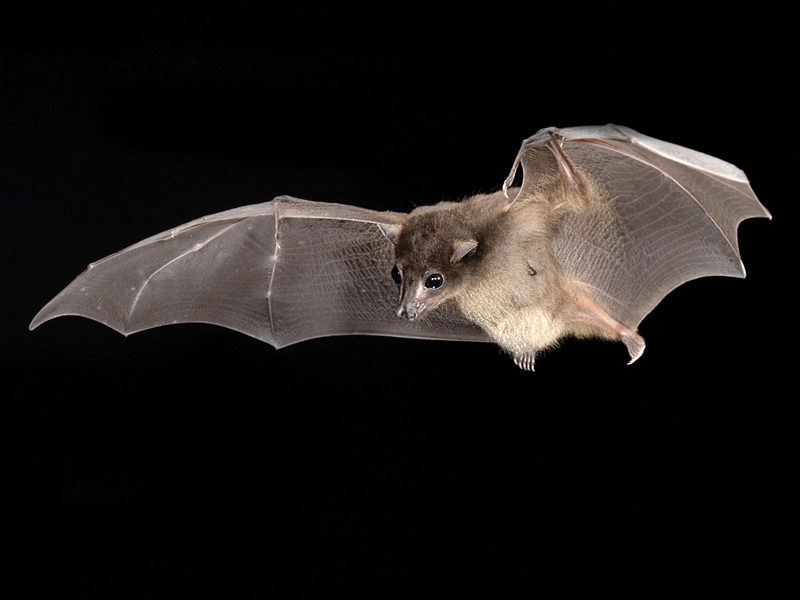
This tiny fruit bat has been documented by researchers close to flowering
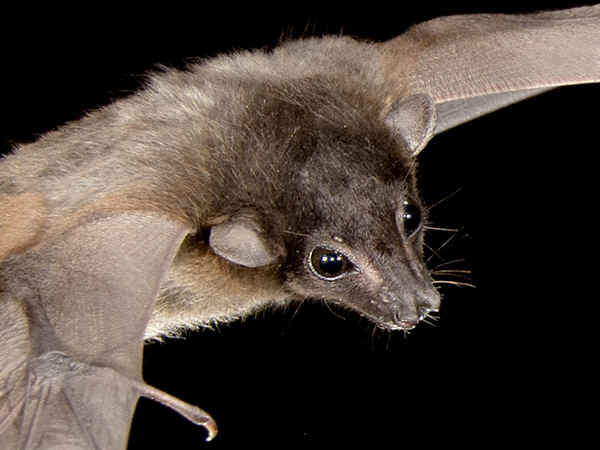
wild bananas, and in forest edge habitats. It has long grey-brown fur, which
is darker and more brownish on the head and nape, a pointed snout and no tail.
(Phillipps & Phillipps, 2016).
Figs 1 and 2 : Examples from Mount Kinabalu, Sabah, Borneo. Photos thanks to C. M. Francis.
Fig 3 : Montane forest and other habitats surround the peaks of Mount
Kinabalu, Sabah, Borneo. Aethalops aequalis has been documented from the
slopes of this mountain, the highest in Borneo.
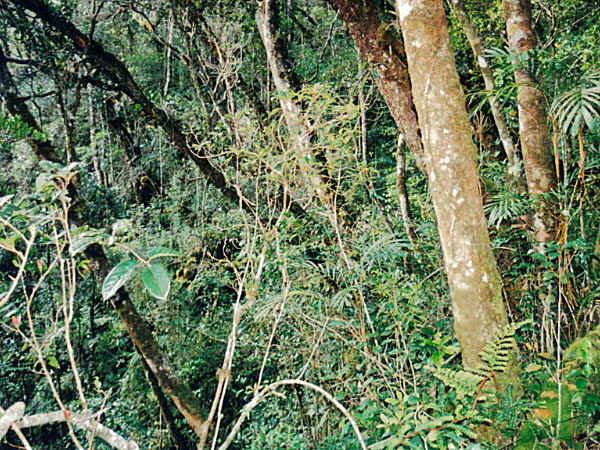
Fig 4 : Dense, cluttered forest on the slopes of Mount Kinabalu at around
1800 metres. The small size of Aethalops aequalis should allow this
bat to navigate such habitats with ease.
References :
Jayaraj, J.V.K., Struebig, M. and Tingga, R.C.T. 2016. Aethalops aequalis.
The IUCN Red List of Threatened Species 2016: e.T136541A21977630.
Kitchener, D. J. (1990). Wild mammals of Lombok Island. Records of the
Western Australian Museum Supplement, 33, 1-129.
Phillipps Q. & Phillipps K. (2016). Phillipps’ Field Guide to the
Mammals of Borneo and Their Ecology: Sabah, Sarawak, Brunei, and Kalimantan.
Second Edition. John Beaufoy Publishing. 400 pp.
|