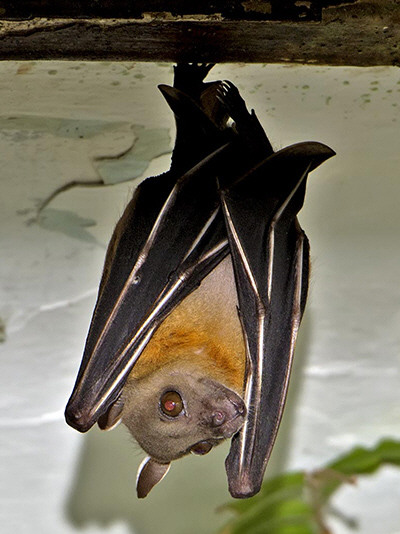
Fig 1
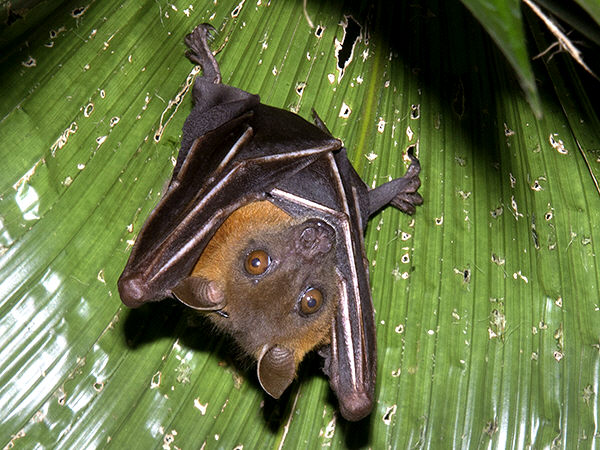
Fig 2
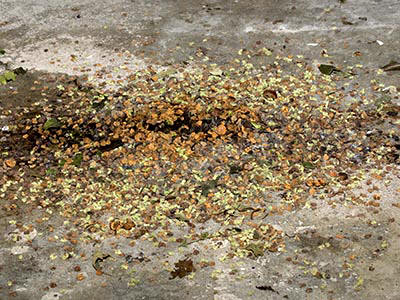
Fig 3
|
Order : CHIROPTERA
Family : Pteropodidae
Species : Cynopterus horsfieldii
Forearm Length : up to 7.6 cm
Weight : up to 70 grams
Cynopterus horsfieldii
(Horsfield's Fruit Bat) is
one of the largest of the genus Cynopterus. It occurs in a wide range
of elevations, from lowland to montane, and in a broad range of habitats,
including various forest types, plantations, orchards and mangrove.
It utilizes a variety of roosts including caves, abandoned buildings and
sheltered spaces beneath large leaves. Its diet is varied and is known to
include the fruits of Elaeocarpus, Payena and Ficus (i.e.
figs). Some studies have concluded that this species is a nomadic bat,
groups of which take advantage of fruiting episodes amongst
rainforest trees far from their regular roost.
In the field it can be distinguished from the Sunda
Short-nosed Fruit
Bat by its larger size, broader wings and its robust, dog-like muzzle.
Its fur is mainly greyish-brown, but males possess orange-brown fur around
the throat, which extends to the upper chest and shoulders. As with other
Cynopterus bats, its wing bones and ears are edged with white.
This species is known from southern Vietnam, Laos, Cambodia, Thailand,
Peninsular Malaysia, Borneo, Sumatra and Java. There are no adequately
documented records from Singapore, and its status there is considered
'indeterminate'.
Fig 1 : Adult male in an abandoned building near Fraser's Hill, Pahang,
Peninsular Malaysia.
Fig 2 : Example from Batu Ferringhi beach, Pulau Pinang, Peninsular
Malaysia, roosting beneath a fan palm.
Fig 3 : A significant mound of faecal droppings, seeds and other debris at a popular roosting
spot.
References :
Francis, C.M. 2019. A Field Guide to the Mammals of South-east Asia. Second
Edition. New Holland. 416 pp.
Kingston, T., Lim B.L., Zubaid, A., 2006. Bats of Krau Wildlife
Reserve. Universiti Kebangsaan Malaysia.
Phillipps Q. & Phillipps K. (2016). Phillipps’ Field Guide to the
Mammals of Borneo and Their Ecology: Sabah, Sarawak, Brunei, and Kalimantan.
Second Edition. John Beaufoy Publishing. 400 pp.
|