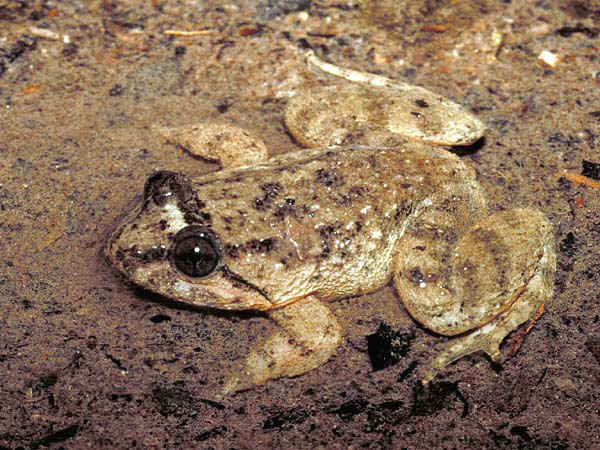
Fig 1
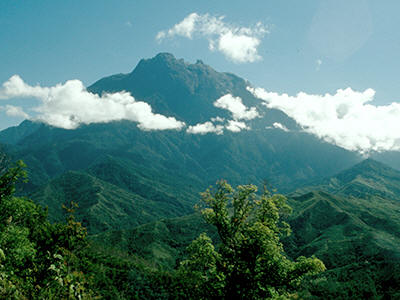
Fig 2
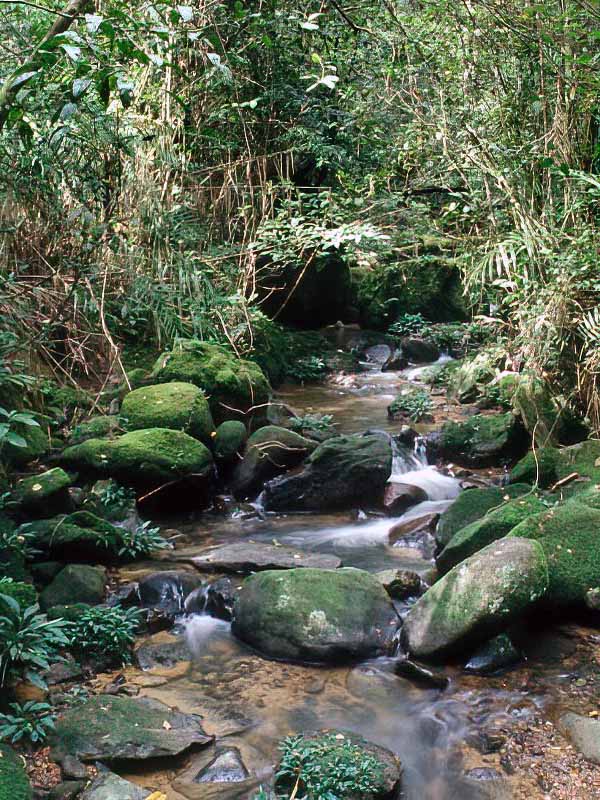
Fig 3
|
Family : DICROGLOSSIDAE
Species : Limnonectes mocquardi
Size (snout to vent) :
Mean female size of 63 mm, mean male size of 65 mm (Frogs of Borneo
website).
Limnonectes mocquardi (Kinabalu Fanged Frog), originally Rana paradoxa
(Matsui et al, 2013), is a poorly studied dicroglossid frog endemic to
Borneo. It has been recorded in Sabah at Mount Kinabalu, Crocker mountains
and Tawau, and in Sarawak at Gunung Mulu (see Frogs Of Borneo website, link
below).
Figure 1 is of a small frog (estimated snout-vent length of 30 mm)
photographed at night in a fast-flowing stream with a mixed rocky and sandy
substrate near the headquarters of Mount Kinabalu National Park, at around
1600 metres elevation. This frog is assumed to be Limnonectes mocquardi
(i.e. part of the Limnonectes kuhlii species group), based on its robust
head, body and hind limbs, the markings on its head, and its skin texture. Its
appearance matches less closely
other frogs of the same genus from Mount Kinabalu and its surrounding area
which as of 2026 include, for example, L. gyrinophorus, L.
kinabaluensis, L. paginatanensis, L. paulyambuni and L.
separatus (see Frogs Of Borneo website, link below).
Little is specifically known of the ecology of Limnonectes mocquardi
(IUCN, 2022).
Fig 1 : Tentative example of Limnonectes mocquardi from 1600 metres
elevation on Mount Kinabalu, Sabah, Borneo; it has an estimated snout-vent
length of 30 mm.
Fig 2 : The forested slopes and rocky summit of Mount Kinabalu (4095 metres)
as viewed from the west.
Fig 3 : Fast flowing, rocky stream with sandy substrate at Mount Kinabalu;
the frog in Figure 1 was found in this small tributary of the Liwagu River.
References and links :
IUCN SSC Amphibian Specialist Group. 2022. Limnonectes mocquardi. The
IUCN Red List of Threatened Species 2022: e.T125166021A125166055
Matsui, M., Dubois, A. and Ohler, A. 2013. New replacement name for Rana
paradoxa Mocquard, 1890 with designations of lectotypes for Rana
paradoxa and Rana conspicillata Günther, 1872: both synonymized
with Limnonectes kuhlii (Tschudi, 1838) (Dicroglossidae:
Dicroglossinae). Asian Herpetological Research Serial 2(4): 187-189.
Frogs Of Borneo - Limnonectes mocquardi
|