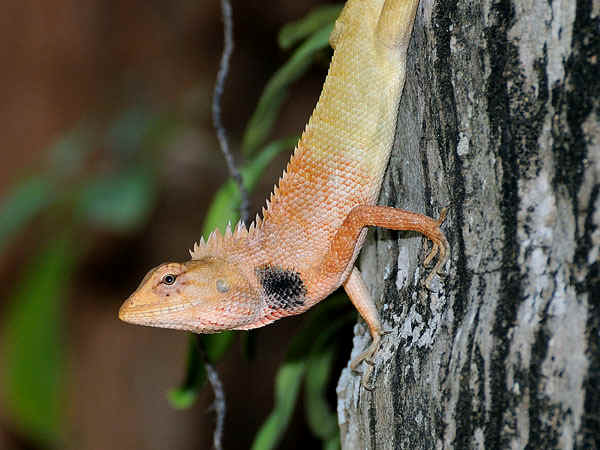
Fig 1
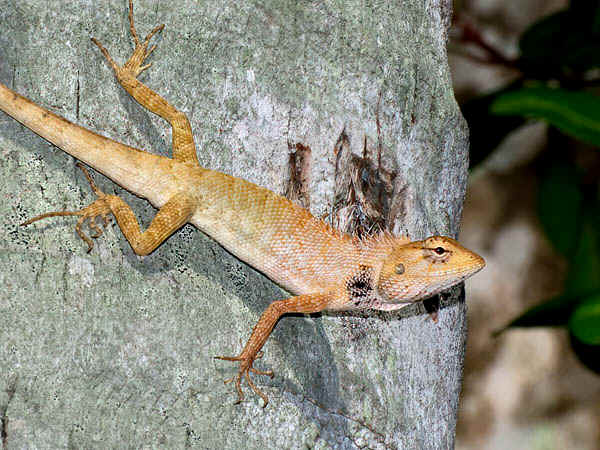
Fig 2
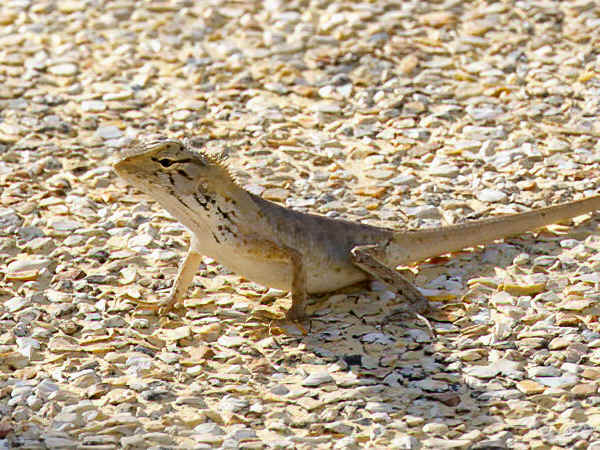
Fig 3
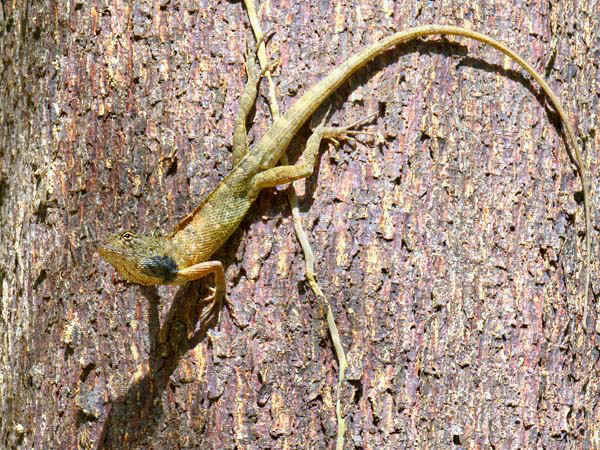
Fig 4
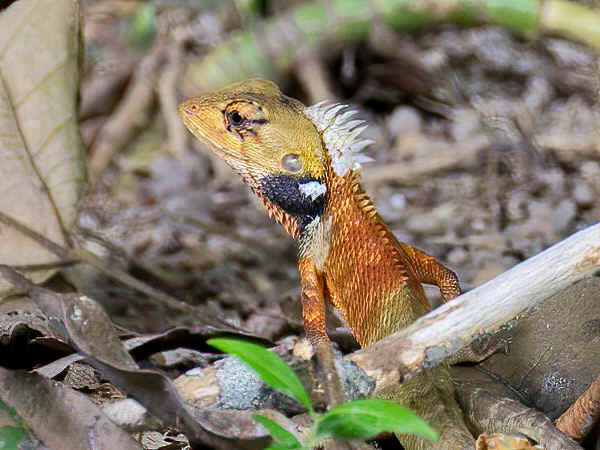
Fig 5
|
Family : AGAMIDAE
Species : Calotes thailandensis
Size (snout to vent) : 8.7 cm (mean in males)
Size (total length) : ~ 34 cm Calotes
thailandensis ('Thailand Garden Lizard') was first described in 2026
(Prakobkarn et al). Formerly it was treated as part of Calotes versicolor,
itself part of the C. irawadi complex).
The species occurs throughout much of Thailand, except northern and
northwestern areas.
Featured here are 5 examples from Krabi and Songkhla provinces in southern
Thailand. Assuming these are all native examples, their identity is
unequivocally that of Calotes thailandensis as there are no other
members of the C. irawadi complex described from these two provinces.
The colours and patterning of the examples shown here closely resemble those
in Figure 8 of Prakobkarn et al (2026).
Some species of Calotes adapt well to man-made habitats such
as rubber plantations, agricultural areas, scrublands, roadside vegetation
and urban parks.
The native range of
Calotes thailandensis has probably expanded southwards far beyond its
original boundary into anthropogenic habitats in Peninsular Malaysia and
Singapore. The species may thus form a significant part (or all) of
the population of 'garden lizards' or 'changeable lizards' commonly seen in much of Peninsular
Malaysia and Singapore, but this has yet to be studied in depth.
Some Calotes lizards from Singapore closely resemble the example in Figures 1 and 2.
Figs 1 and 2 : Two examples from Krabi, southern Thailand.
Fig 3 : Example from Songkhla City, southern Thailand.
Fig 4 : Example from Khao Reng Wildlife Sanctuary, Songkhla province,
Southern Thailand.
Fig 5 : Male in full breeding colours from Khao Reng Wildlife
Sanctuary, Songkhla province, Southern Thailand. The neck crest appears
white in this example, but this appears to be the remnants of a recent
moult.
References :
Prakobkarn A, Zug GR, Tandavanitj N, Ngamprasertwong T (2026)
Systematics of the Calotes irawadi complex (Squamata, Agamidae)
with two newly described species from Thailand. ZooKeys 1281: 69–104. |