Fig 1
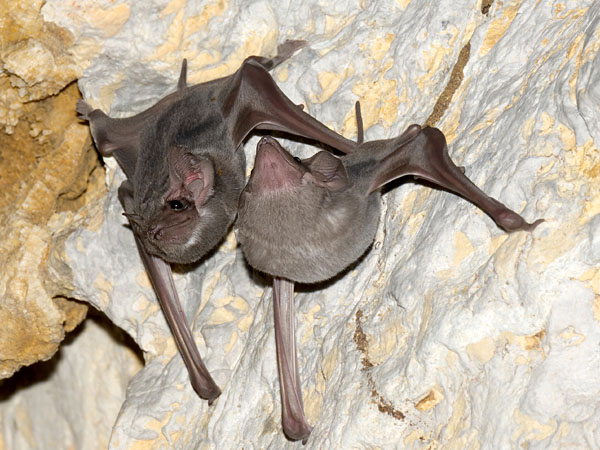
Fig 2
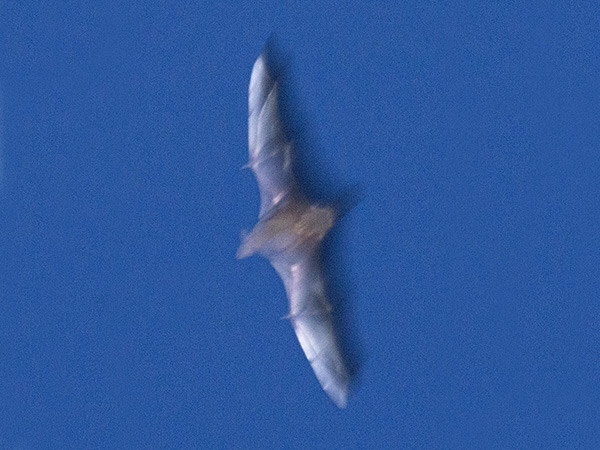
Fig 3
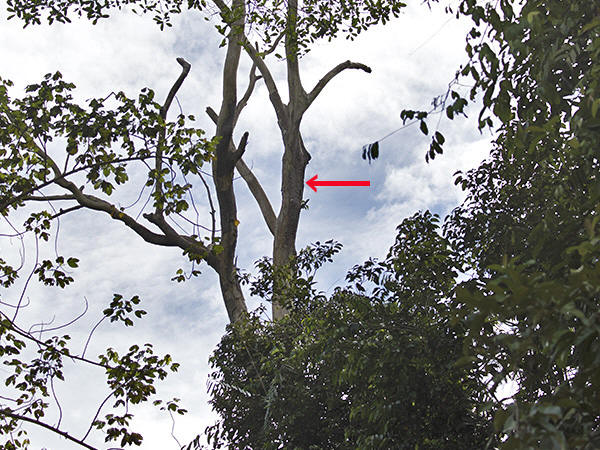
Fig 4
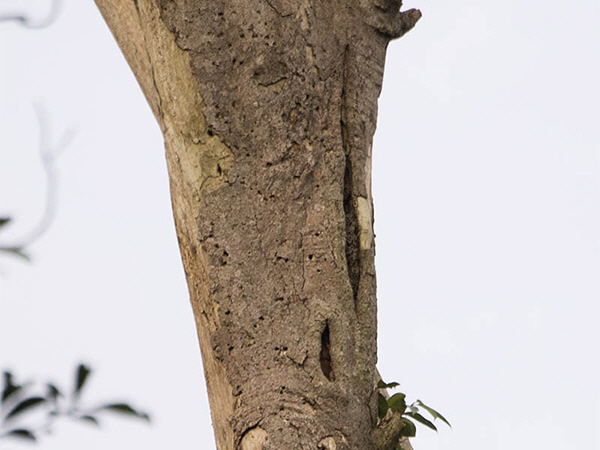
Fig 5
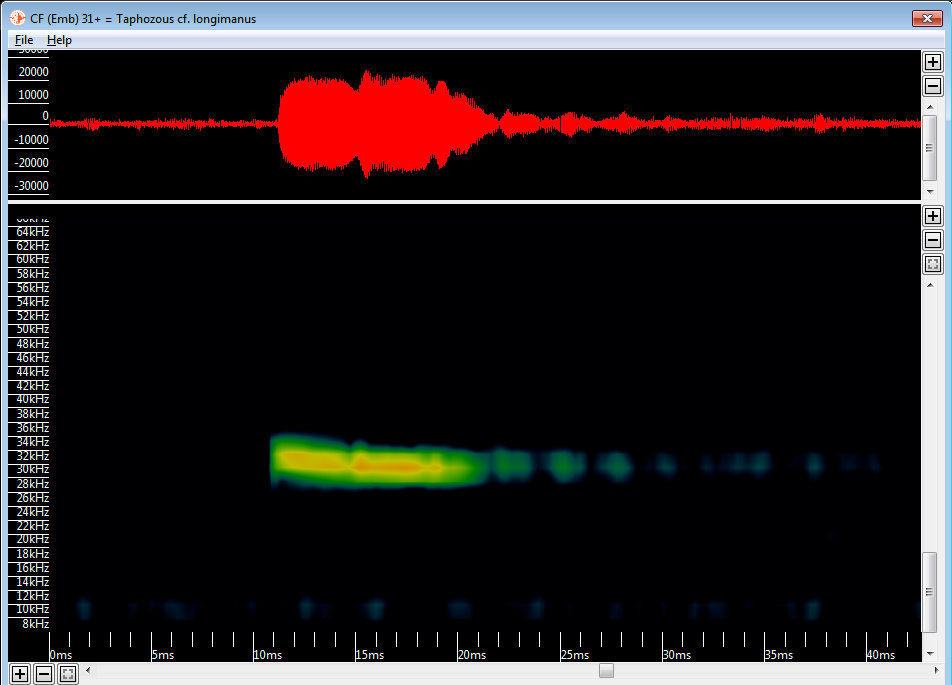
Fig 6
|
Order : CHIROPTERA
Family : Emballonuridae
Species : Taphozous longimanus
Forearm Length : up to
6.3 cm
Tail Length : up to 3.3 cm
(Source : Lekagul & McNeely, 1977)
Taphozous longimanus
(Long-winged Tomb Bat) is a fast-flying species of the Emballonuridae
family. This bat is particularly well documented in Thailand, where it is known
to roost in groups of 2-20 in hollow trees, caves, water wells and beneath
the eaves of houses (Lekagul & McNeely, 1977). Notably this bat often appears
tolerant of brightly lit roosts, which other bats would tend to avoid.
Francis (2019) notes that this bat will also roost in the crowns of palm
trees (presumably Cocos nucifera).
In Singapore the species appears
to be mainly coastal; the first record for the country was captured in 2016 on intertidal mudflats on Pulau Ubin, an island in the northeast
of the republic (Teo, 2018). Based on sonogram recordings, it appears the species
also forages in many other parts of coastal northeast Singapore (pers.
obs.).
Taphozous longimanus is smaller-bodied than Taphozous
melanopogon, but its maximum forearm measurements are similar, based on
measurements in Lekagul & McNeely (1977) i.e. 6.3 cm in the former versus 6.5 cm in
the latter.
The fur of Taphozous longimanus is blackish or dark brown to yellowish
brown, sometimes speckled with white (in older bats?). Sexual dimorphism is
described in Lekagul & McNeely (1977); males are described as 'usually
cinnamon brown' and females as 'usually dark grey'.
The underside of the
chin is devoid of fur; males have a throat pouch, which females lack. The
wings are quite narrow and relatively long, and the tail is long and
narrow, always tapering to a sharp tip.
Included here is a video of 6 bats emerging from a
treehole at the edge of Panti Forest, Johor, Peninsular Malaysia at dusk.
The wing shape suggests these are Taphozous longimanus.
[Watch video
of 6 bats emerging from a treehole at dusk (1:07).]
The species can be observed in the skies over Bangkok, Thailand before dusk (Lekagul & McNeely,
1977).
Taphozous longimanus is known to occur in parts of India,
Sri Lanka, Bangladesh, Myanmar, Thailand, Laos, Cambodia, Peninsular Malaysia,
Singapore, Sumatra, Borneo, Java, Bali, Lombok and other
islands of eastern Indonesia.
Note: as of 2026, the range maps in some online resources (IUCN,
iNaturalist) incorrectly suggest that this bat does not occur in peninsular
Thailand and Peninsular Malaysia. The range maps in Lekagul & McNeely (1977) and
Francis (2019), suggest the species might occur throughout the Malay
Peninsula.
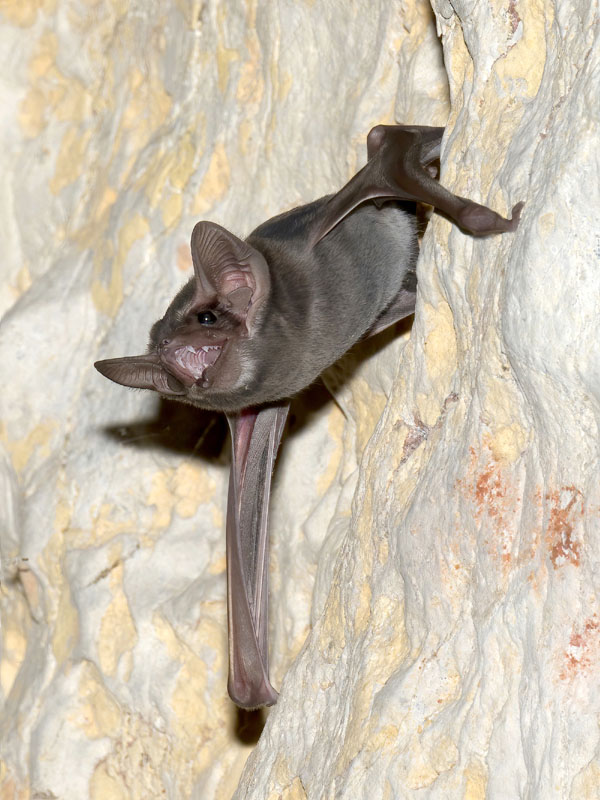
Fig 1 : Example from a cave roost in karst limestone in Satun province,
southern Thailand.
Fig 2 : Roosting pair in Satun province, southern Thailand; note the absence
of fur beneath the chin.
Fig 3 : Example emerging at dusk from a tree cavity
at the edge of Panti Forest. Johor, Peninsular Malaysia. A
total of 6 bats were seen to emerge.
Figs 4 and 5 : Dead tree at Panti Forest, with arrow marking the entry to
the tomb bat roost.
Fig 6 : Constant frequency (CF) call recorded at Bedok Reservoir, Singapore,
from a search-phase sequence of 16 pulses, with an average peak frequency of
31.6 kHz. This is tentatively identified as Taphozous longimanus (see
Hughes et al, 2011).
References :
Francis, C. M. (2019). A Field Guide to the Mammals of South-east Asia.
Second Edition. New Holland. 416 pp.
Hughes, A. C., Satasook, C., Bates, P. J., Soisook, P., Sritongchuay, T.,
Jones, G., & Bumrungsri, S. (2011). Using echolocation calls to identify
Thai bat species: Vespertilionidae, Emballonuridae, Nycteridae and
Megadermatidae. Acta Chiropterologica, 13(2), 447-455.
Lekagul, B., McNeely, J., (1977). Mammals of Thailand. Association for the
Conservation of Wildlife, Thailand. 758 pp.
Teo, R. C. H. (2018). First record of the long-winged tomb bat in Singapore.
Singapore Biodiversity Records. 2018: 59-61. National University Of
Singapore.
|