 |
Order : CHIROPTERA
Family : Rhinolophidae
Species : Rhinolophus cf. chiewkweeae
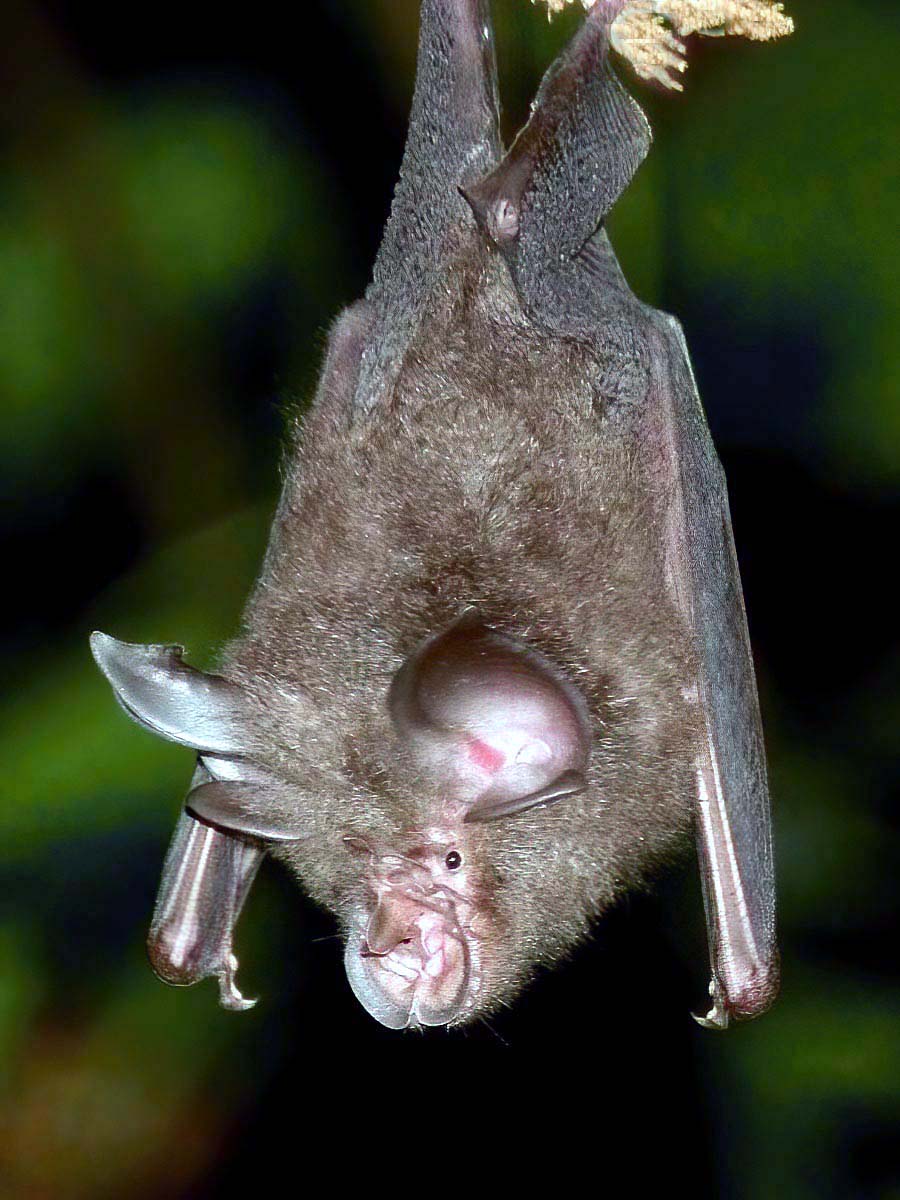
The bat shown here is a
rhinolophid photographed by Mr. Serin Subaraj on Tioman Island, Pahang, Peninsular
Malaysia in 2014.
As of 2017, 8 rhinolophid bats were proven to occur on Tioman comprising R.
affinis, R. borneensis, R. refulgens (R. lepidus), R. macrotis, R. morio, R.
pusillus, R. robinsoni and R. stheno (Lim et al, 2017).
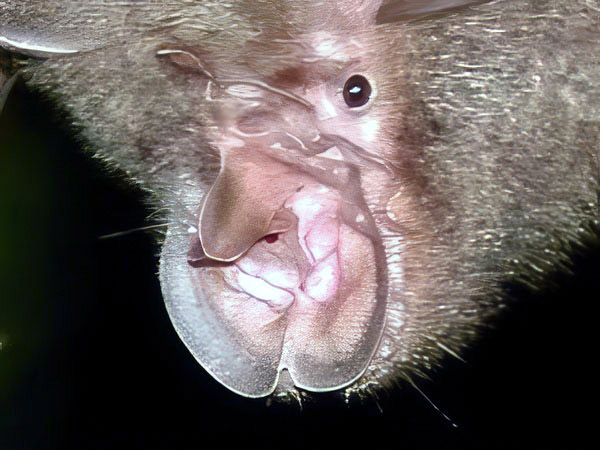
The bat illustrated here is tentatively identified as Rhinolophus
chiewkweeae; this conclusion is based on the shape of the noseleaf, in particular the shape of the sella,
connecting process and lateral lappets.
Rhinolophus chiewkweeae typically possesses bright orange-brown fur,
but this bat is brownish-grey. However, the
white-balance setting of the camera used is not known, so the apparent fur colour
in these images may be inaccurate.
This bat appears to be perch-hunting; this is a hunting strategy where bats suspend themselves from a twig or small branch
whilst waiting for insects, such as moths and beetles, to fly past, whereupon
they will launch into the air to capture their prey.
Rhinolophus chiewkweeae has been documented at two sites in
Johor state, to the southwest of Tioman Island, but has yet to be reported
from Pahang state which includes Tioman Island (Muhd Amsyari Morni et al, 2016).
Fig 1 : The bat was perched near a lowland forest stream on the island of
Tioman, and was probably waiting for flying insects to come within range. Photo thanks to Serin
Subaraj.
Fig 2 : Close-up of the noseleaf. Photo thanks to Serin Subaraj.
Fig 3 : Intact, lowland primary forest still exists on Tioman Island,
inland from a zone of disturbed, coastal forest; this habitat supports a
great diversity of vertebrates, including around 20 species of bat (Lim et
al, 2017).
References :
Lim V-C, Ramli R, Bhassu S, Wilson J-J (2017) A checklist of the bats of
Peninsular Malaysia and progress towards a DNA barcode reference library.
PLoS ONE 12(7): e0179555.
Morni, M. A., Ahmad Tahir, N. F. D., Rosli, Q. S., Dee, J. W., Azhar, I.,
Roslan, A., ... & Anwarali Khan, F. A. (2016). New record of Rhinolophus
chiewkweeae (Chiroptera: Rhinolophidae) from the east coast of
Peninsular Malaysia with new information on their echolocation calls,
genetics and their taxonomy. Raffles Bulletin of Zoology, 64.
Yoshiyuki, M. and Lim, B.L. 2005. A New Horseshoe Bat, Rhinolophus
chiewkweeae (Chiroptera, Rhinolophidae), from Malaysia. Bulletin of the
National Science Museum. Series A, Zoology 31(1): 29-36.
|