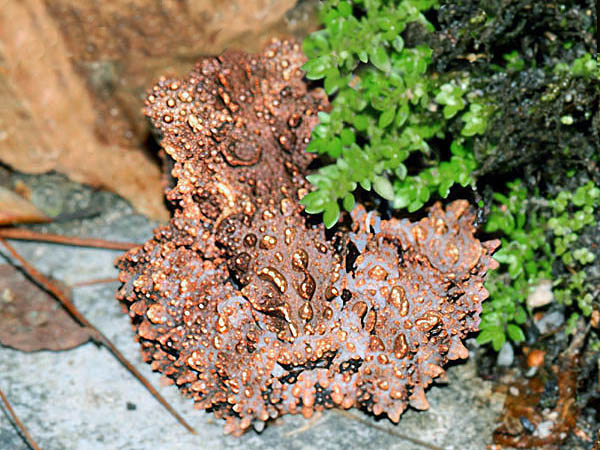
Fig 1
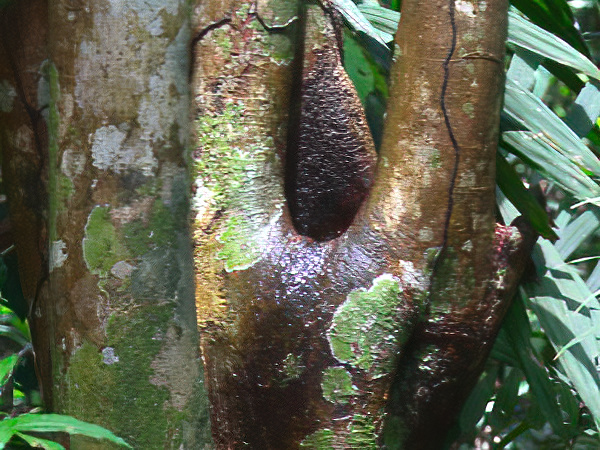
Fig 2
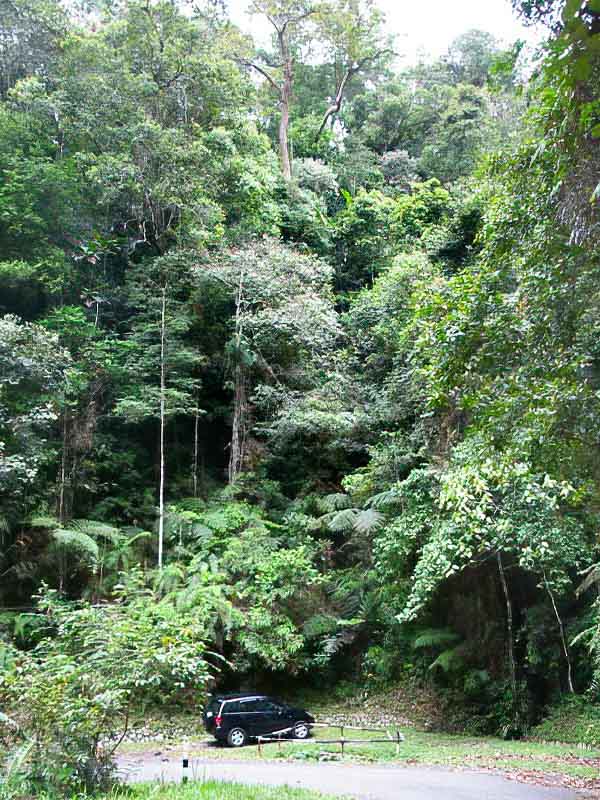
Fig 3
|
Family : RHACOPHORIDAE
Species : Theloderma leporosum
Size (snout to vent) : to 65 mm
(Chan & Norhayati, 2019).
Theloderma is a genus of elusive frogs, many with highly camouflaged, warty skin. They are known as mossy frogs, warty
frogs or bug-eyed frogs. As of 2026, the genus
comprises 26 species, nearly all of which occur in Southeast Asia; they
reach their highest diversity in Vietnam, where more than 10 species occur.
Some
species appear to be canopy dwellers, only descending close to the forest
floor to mate and lay their eggs in small, water-filled cavities known as
phytothelms, which form in tree trunks or on top of branches.
Theloderma
leporosum (Malayan Mossy Frog, Malaya Bug-eyed Frog) is a rarely
encountered montane example from Peninsular Malaysia and parts of
Sumatra.
Its dorsum is brown to reddish-brown, adorned with abundant large, pointed
warts. Near the centre of its back the warts are ridge-like in shape. Its
ventral surface comprises black and white (or pale blue) reticulated
patterning. The hind feet have orange webbing.
Theloderma
leporosum occurs in primary and old secondary forest, where large trees
still remain in which phytothelms may form.
Individuals have been found in treeholes at around 3 metres from the ground, on the forest floor, and on a palm
leaf (Chan & Norhayati, 2019).
In Peninsular Malaysia this species ranges from 800 metres to at least 1200 metres
elevation, with sighting records in the three longest mountain ranges of the
peninsula, which includes the Bintang Range (= Banjaran Bintang), Titiwangsa
Main Range (= Banjaran Titiwangsa) and Timur Range (= Banjaran Timur).
The example shown here was photographed at a roadside at Fraser's Hill in
the Titiwangsa Range at an elevation of 1250 metres.
Theloderma
leporosum also occurs in parts of the Barisan Mountains of Sumatra, including
West Sumatra and North Sumatra provinces
(IUCN, 2019).
Fig 1 : Example from Fraser's Hill, Peninsular Malaysia, found at the
edge of a forest road at an elevation of 1250 metres.
Fig 2 : Example phytothelm formed at the junction of near-vertical tree trunks;
rainwater runs down the tree trunks to form a small, semi-permanent pool of
water in the hollow. Tadpoles and aquatic invertebrate larvae can occur in
such places.
Fig 3 : Typical forest road in Fraser's Hill with tall, montane forest on both
sides.
References :
Chan, K.O. and Norhayati, A. 2009. Distribution and natural history notes on
some poorly known frogs and snakes from Peninsular Malaysia. Herpetological
Review 40: 294-301.
IUCN SSC Amphibian Specialist Group. 2019. Theloderma leporosum. The
IUCN Red List of Threatened Species 2019: e.T59037A89873460
|