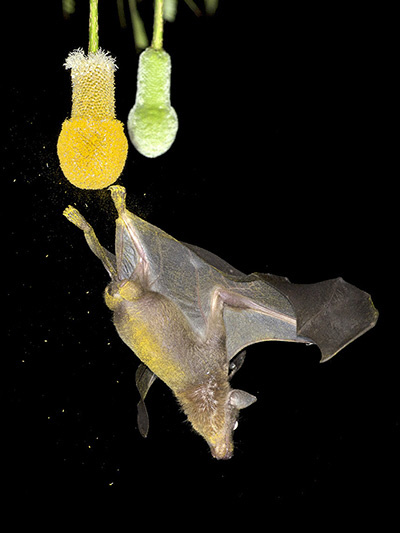
Fig 1
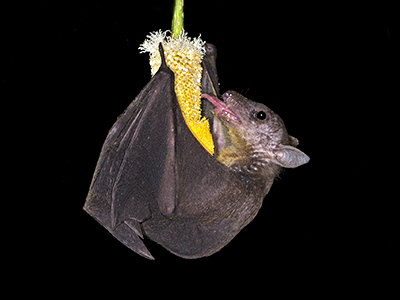
Fig 2
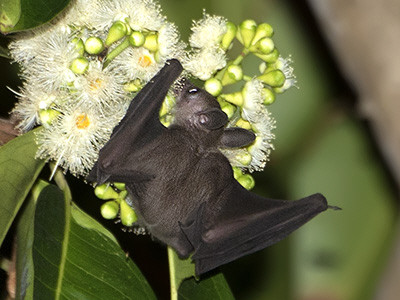
Fig 3
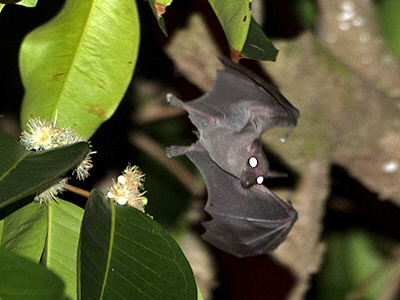
Fig 4
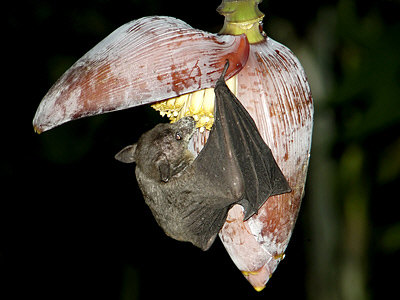
Fig 5
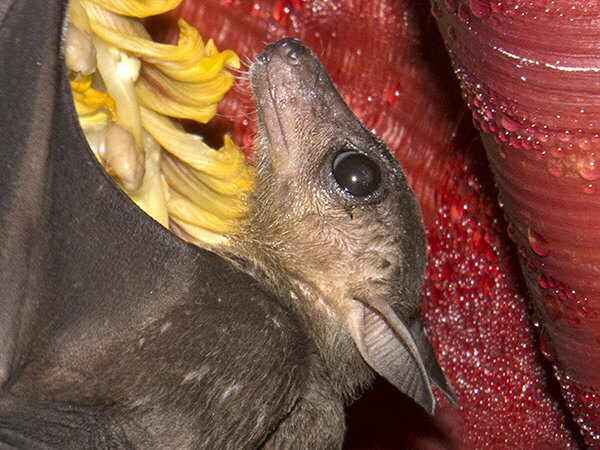
Fig 6
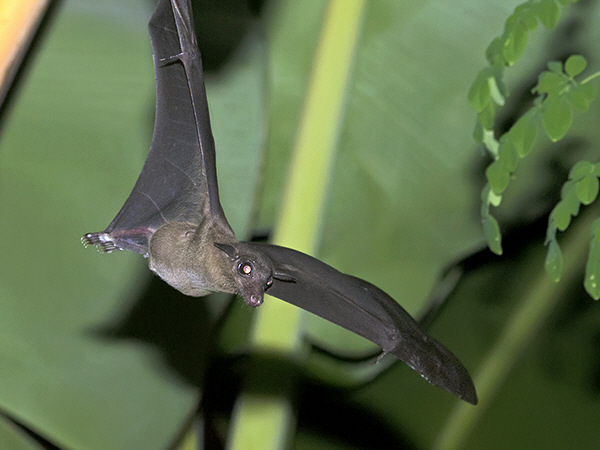
Fig 7
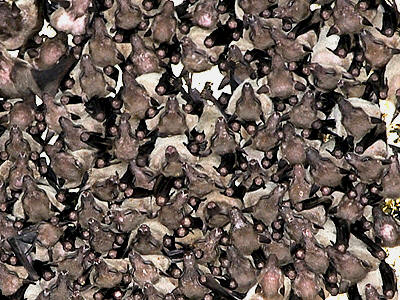
Fig 8
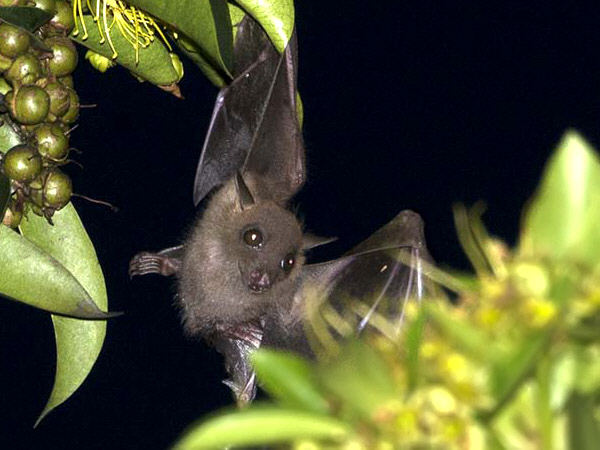
Fig 9
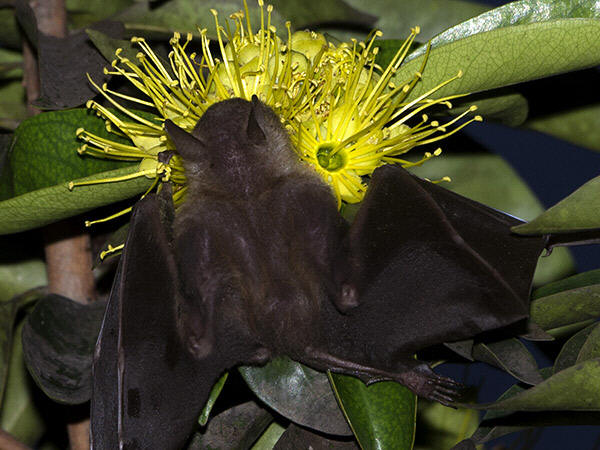
Fig 10
|
Order : CHIROPTERA
Family : Pteropodidae
Species : Eonycteris spelaea
Forearm Length : up to 7.0 cm
Weight : up to 60 grams
Eonycteris spelaea (Dawn Bat, Cave Nectar Bat, Common Nectar Bat) has
a wide distribution; within Southeast Asia it is known to occur throughout
the region, but appears less widespread in Borneo. The species maintains a
foothold in Singapore, where it is locally classified as 'vulnerable'; a
long-term ecological and population study is sorely needed.
Waldien et al (2020) state the following: "Its global population is declining
due to extensive disturbance in its roosts from hunting, mining, and
numerous other threats; a lack of consistent monitoring makes accurate
population estimates difficult."
Eonycteris spelaea roosts in large, noisy colonies of hundreds or thousands
of individuals. They are known to fly many kilometres each night in search of the nectar of flowering
trees and shrubs. The species is an important pollinator of fruit trees
including banana and durian, as well as forest products including Petai (Parkia
speciosa).
Their dorsal fur
is greyish-brown, and the ventral fur is medium grey. Around the neck the fur
can be tinged yellowish-brown. The muzzle is dog-like in shape, and its
tongue is long and probing.
In Singapore they tend to roost beneath man-made structures such as flyovers
near forested areas; this makes them highly vulnerable to disturbance. Their
natural roosts may have been destroyed during development. On some parts of
the island they may be observed feeding on nectar and pollen on wayside
trees, such as Golden Penda (Xanthostemon chrysanthus), as well as
Petai (see Figs 1 and 2).
Figs 1 and 2 : Feeding on nectar from
the distinctive flowers of Petai (Parkia speciosa), Singapore.
Figs 3 and 4 : Feeding on the nectar and/or pollen of flowers of the Sea Apple tree
(Syzygium grande) at Tanjong Jara, Terengganu, Peninsular Malaysia.
Figs 5 to 7 : Attracted to nectar-rich flowers of banana plants in
Singapore.
Fig 8 : This roost in Singapore has around 500 bats.
Figs 9 and 10 : A lone Cave Nectar Bat is attracted to the flowers of Golden
Penda (Xanthostemon chrysanthus) in Singapore: this tree is a native
of Australia but is sometimes planted as an ornamental, roadside tree in
other countries.
References :
Francis, C.M., 2001. Mammals of South-east Asia. New
Holland.
Payne, J., Francis, C.M., 1998. A Field Guide to the Mammals of
Borneo. The Sabah Society.
Waldien, D.L., Adleson, S. & Wilson, Z. 2020. Eonycteris spelaea.
The IUCN Red List of Threatened Species 2020: e.T7787A22128326
|