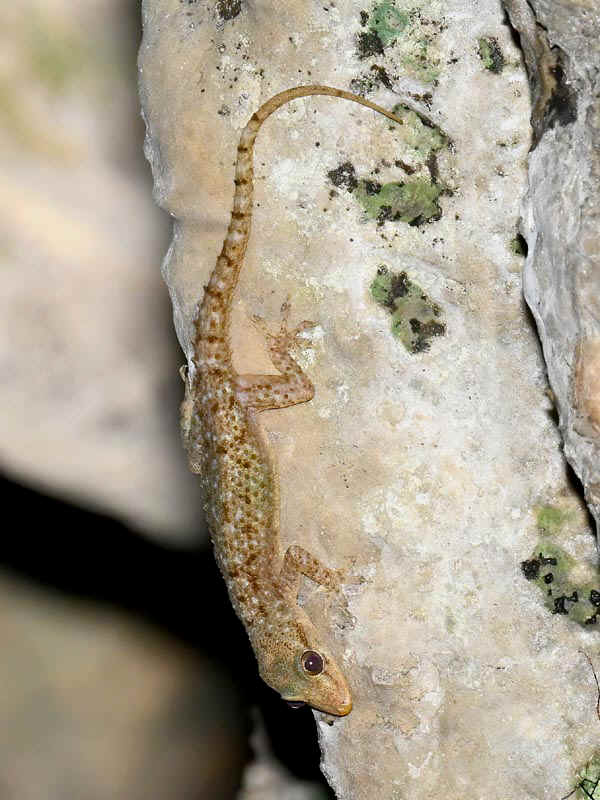
Fig 1
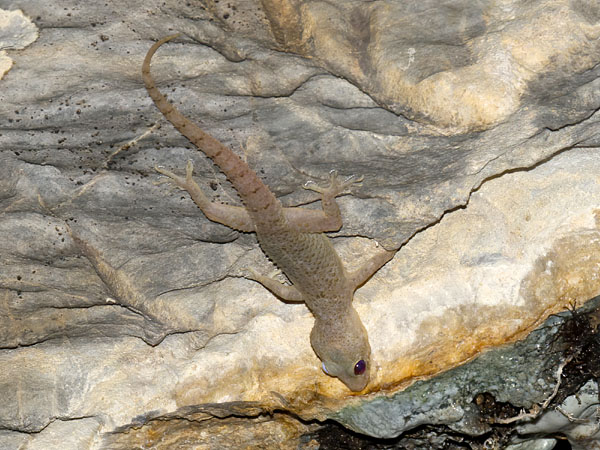
Fig 2
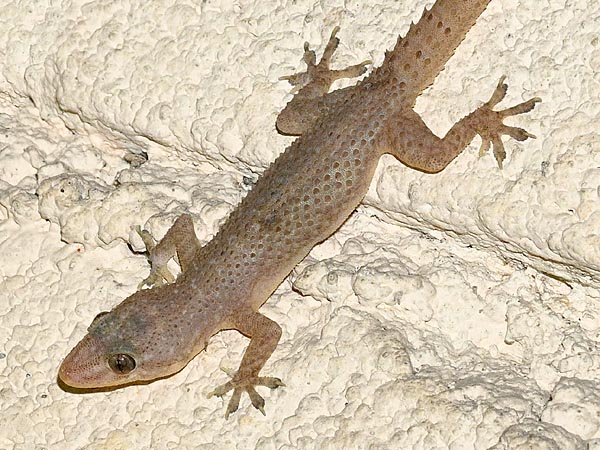
Fig 3
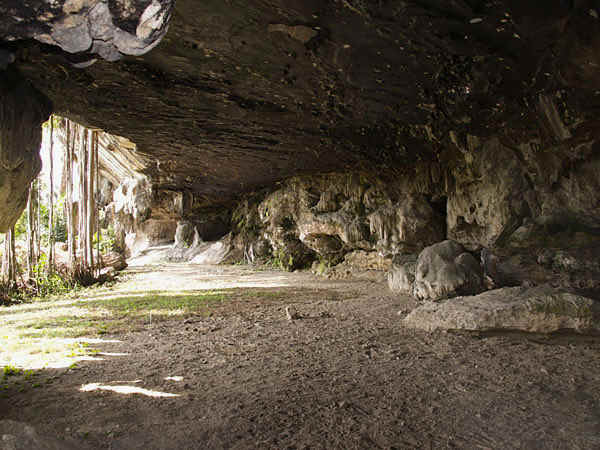
Fig 4
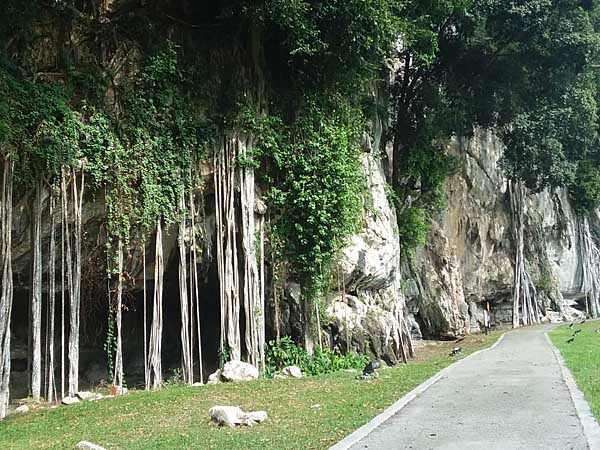
Fig 5
|
Family : GEKKONIDAE
Species : Hemidactylus brookii
Size (snout to vent) : up to 6.5 cm
Size (total length) : up to 8.4 cm
(Source : Grismer, 2011)
Hemidactylus brookii
(Brook's House Gecko) is a wide-ranging, commensal lizard which occurs in
many countries in Africa, parts of the Indian subcontinent, and parts of
Southeast Asia, including Myanmar, Thailand, Peninsular Malaysia,
Philippines, Borneo and Flores (Reptile Database, 2024).
In Singapore four individuals were found in 2016 in a small area of a
neighbourhood park (Groenewoud & Law, 2016). These may have been
imported with gardening materials.
Although its original origins are disputed, it appears likely that the
global range of this adaptable lizard has expanded as a consequence of human
activities; the presence of eggs, hatchlings or adults is easily overlooked
in cargo shipments aboard seagoing vessels.
In Southeast Asia this gecko is found mainly in or on man-made habitats
including buildings, gazebos, drains and walls near artificial
lighting.
In Peninsular Malaysia there are records from the northern state of Perlis,
Penang Island and Pangkor Island (Perak state). Presented here are new
records from the Perak mainland at Gunung Lang in Ipoh, found in 2024.
Gunung Lang comprises a public park at the base of a karst limestone hill; Hemidactylus
brookii were found at the entrance to a cave, and on a nearby building.
The body colour of Hemidactylus brookii is typically light brown
(although in other regions it can be quite variable). Its head is relatively large, and elongate. Its
toes all bear well-developed claws.
Its dorsal surface bears 14-17 rows of densely-packed tubercles; these are
described as 'large, keeled and trihedral' (Grismer, 2011). The dorsal
surface of the tail also bears somewhat larger 'spinose' tubercles, which
are more widely spaced. The presence of abundant tubercles is a useful
identifying feature for the species.
Figs 1 and 2 : Two examples clinging to the vertical face and roof
of a karst limestone cave at Gunung Lang, Ipoh, Perak, Peninsular
Malaysia.
Fig 3 : A third example from Gunung Lang, clinging to the wall of a hut
near the limestone cliff face.
Figs 4 and 5 : The large cave and cliff-face at Gunung Lang where Hemidactylus
brookii is to be found.
References :
Grismer, L. L. (2011). Lizards of Peninsular Malaysia, Singapore, and
their Adjacent Archipelagos. Their Description, Distribution, and
Natural History. Edition Chimaira, Frankfurt am Main. 728 pp.
David Groenewoud & Law Ing Sind. (2016). Brook’s house geckos
at Admiralty Park. Singapore Biodiversity Records 2016: 60. National
University of Singapore.
Links : Reptile Database
|